- Tiles
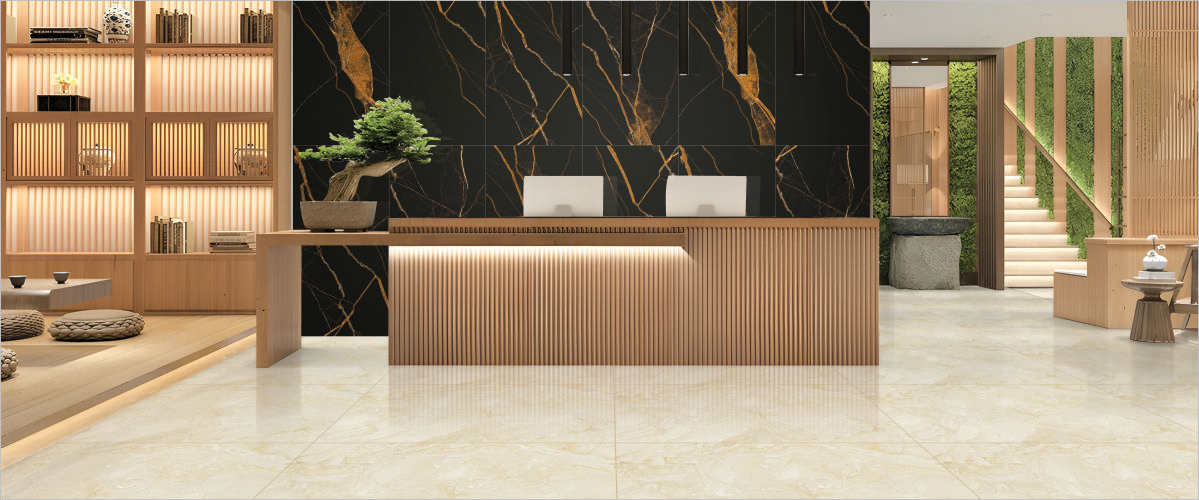
Choosing the right tiles is important for home interiors & flooring because they decide how your space looks, feels, and lasts over time. The right tiles can make your home stylish, comfortable, & easy to maintain.
Many homeowners often get confused between ceramic and vitrified tiles since they look quite similar but differ in quality & use. The main difference lies in their porosity and durability. Ceramic tiles are affordable but can get stained easily if they are not glazed. On the other hand, vitrified tiles are less porous & are more durable because they are made at a higher temperature and mixed with materials like silica, quartz, & feldspar.
Understanding Ceramic and Vitrified Tiles
1. What are Ceramic Tiles?
Ceramic tile is a hard & flat covering for floors, walls, & backsplashes. They are made from a mixture of clay, sand, & water that is shaped, dried, and fired in a kiln.
Composition & Manufacturing
● Ingredients - Ceramic tiles are made from a mixture of natural materials like clay, sand, & water. They also include colour & other additives to give them strength and design.
● Formation - The mixture is pressed into molds or extruded into the desired shape.
● Firing - The formed tiles are then fired at high temperatures in a kiln to harden them.
● Glazing - A glaze is often applied to the top surface. It creates colour, pattern, & a smooth-waterproof finish.
2. What are Vitrified Tiles?
Composition and Manufacturing Process of Vitrified Tiles
Vitrified tiles are made using a mix of natural materials that make them strong & shiny. The main materials are:
● Clay
● Silica
● Feldspar
● Quartz
● Other Oxides
The manufacturing process of vitrified tiles goes through a few simple steps:
● Mixing: All raw materials like clay, silica, feldspar, & quartz are mixed into a fine powder.
● Pressing: The powder is pressed under high pressure to form the shape of the tiles.
● Drying: The tiles are dried to remove moisture before heating.
● Firing: The tiles are fired in a kiln at very high temperatures (around 1000°C–1300°C) to make them hard, shiny, & non-porous.
● Finishing: After firing, the tiles are cooled & given a final touch like polishing, glazing, or printing for design and shine.
● Quality Check: Each tile is checked for color, shape, & quality before being packed and sent out.
Ceramic Tiles vs Vitrified Tiles: A Quick Comparison
Parameter
Ceramic Tiles
Vitrified Tiles
Composition
- Made from natural clay and water
- Fired at low temperature
- Made from clay, silica, & quartz
- Fired at very high temperature
Manufacturing Process
- Clay is shaped & fired in a kiln
- Easy to mold into many shapes
- Materials are melted & hardened at high heat
- Get a glass-like, glossy look
Strength
- Less strong
- Can break under heavy pressure
- Very strong
- Hard and durable
Durability
- Less durable
- May crack with heavy use
- Highly durable
- Ideal for high-traffic areas
Scratch Resistance
- Moderate scratch resistance
- High scratch resistance
Stain Resistance
- Can get stained if spills are not cleaned quickly
- Highly resistant to stains
- Easy to clean
Water Absorption
- Absorbs more water (around 3%)
- Slightly porous
- Absorbs very little water (less than 0.5%)
- Non-porous
Anti-Slip Properties
- Rough or textured surface
- Less slippery
- Smooth & glossy surface
- Can be slippery when wet
Texture and Finish
- Matte or textured look
- Simple appearance
- Smooth and glass-like
- Glossy and shiny finish
Glazing
- Needs extra glaze for shine and strength
- Naturally glossy, no extra glaze needed
Colours and Sizes
- Available in many colours, shapes, and sizes
- Available in large sizes, many shades and designs
Installation
- Easy and quick to install
- Easy to replace
- Slightly difficult to install
- May need expert help
Care & Maintenance
- Needs regular cleaning
- More grout lines make cleaning tough
- Can last for 10-15 years
- Easy to clean
- Fewer joints make cleaning quick
- Can last for 20-30 years
Repair and Replacement
- Easy to repair or replace single tile
- Hard to replace single tile
- May need professional help
Cost
- More affordable
- Budget-friendly
- More expensive
- Premium option
Area of Use
- Best for indoor areas like bedrooms, halls, & dining rooms
- Suitable for both indoor & outdoor areas
- Works well in wet areas too
Ceramic vs Vitrified Tiles: Advantages
Ceramic Tiles
● They are economical options which makes them a budget-friendly option for homes.
● They are light weight & easy to install. So even small renovation projects can be done without much effort.
● These tiles come in many colours, patterns, & textures. Hence, you get plenty of design options.
● The glazed surface protects them from water & stains. You can use them for kitchens & bathrooms.
● They do not trap dust or mold. As a result, you can have a clean & allergy-free home.
Vitrified Tiles
● Vitrified tiles are very strong & durable. Hence, you can consider them where there is a lot of movement.
● They have low levels of water absorptions. This makes them an ideal option for wet areas & outdoor tiles.
● These tiles are resistant to stain & scratches.
● They require less maintenance & are simple to use .
Ceramic Tiles vs Vitrified: Latest Trendy Finishes & Designs for 2025
Tile Type
What They Are
Why They’re Good
Where to Use
Matte Vitrified Tiles
These tiles have a smooth, non-shiny surface that looks simple & clean.
- Don’t show dust, stains, or water marks easily.
- Give a calm and elegant look.
Living rooms, bedrooms, offices
Earthy Ceramic Shades
These tiles come in warm colours like terracotta, beige, brown, & stone grey.
- Make the home feel warm & natural.
- Go well with wooden furniture and indoor plants.
Homes with traditional or natural décor
Marble-Look Vitrified Tiles
These tiles look like real marble but are stronger & easier to clean.
- Add a rich, luxurious look.
- Don’t get stained or cracked easily.
Living rooms, hallways, bathrooms
Textured Ceramic Tiles
These tiles have patterns like waves, stones, or ridges that add design and grip.
- Look stylish and modern.
- Safer for wet areas as they are not slippery.
Bathrooms, balconies, kitchen walls
Large-Format Vitrified Tiles
Big tiles that have very few gaps between them, making floors look clean and wide.
- Easy to clean and maintain.
- Make rooms look bigger and open.
Living rooms, offices, & shops
Ceramic Tiles vs Vitrified Tiles: Best Application Areas
Area of Use/ Use- Case based recommendation
Recommended Tile Type
Reason
Kitchen
Vitrified Tiles
Resist stains, heat, & moisture
Bathroom
Ceramic Tiles
Affordable & available in slip-resistant options
Living Room
Vitrified Tiles
Durable, glossy, & stylish
Balcony/Outdoor
Vitrified Tiles
Weatherproof & long-lasting
Commercial Spaces
Double-Charged Vitrified Tiles
Handle heavy traffic & last for years
FAQs
What is the main difference between ceramic and vitrified tiles?
Ceramic tiles are made from clay. On the contrary, vitrified tiles are made from clay mixed with other materials.
Are vitrified tiles better than ceramic tiles for flooring?
Yes, vitrified tiles are better for floors because they are tougher & last longer.
What does vitrified tile mean?
Vitrified tiles are tiles baked at a very high temperature by fusing clay & silica at high temperatures. This makes them hard, shiny, & smooth.
Can I use ceramic tiles on floors?
Yes, you can use ceramic floor tiles on floors with less traffic areas.
Which tiles are more durable- ceramic or vitrified?
Vitrified tiles are more durable. They are stronger & stay in good shape for many years.
What is the price difference between ceramic and vitrified tiles?
● Ceramic tiles are cheaper, around ₹30–₹40 per sq. ft.
● Vitrified tiles cost more, around ₹50–₹150 per sq. ft.
Are vitrified tiles waterproof?
Yes, vitrified tiles are almost waterproof. They don’t absorb much water, so they are great for bathrooms & kitchens.
Which tile is easier to clean and maintain?
Vitrified tiles are easier to clean. You can wipe them with a cloth, & they don’t get stained easily.
Can vitrified tiles be used on walls?
Yes, they can. But vitrified tiles are heavier, so many people prefer ceramic tiles for walls.
Which is best for home interiors: ceramic or vitrified tiles?
Both are good. You can use ceramic tiles for walls & less-used areas. For floors or busy areas, you can consider vitrified tiles.